

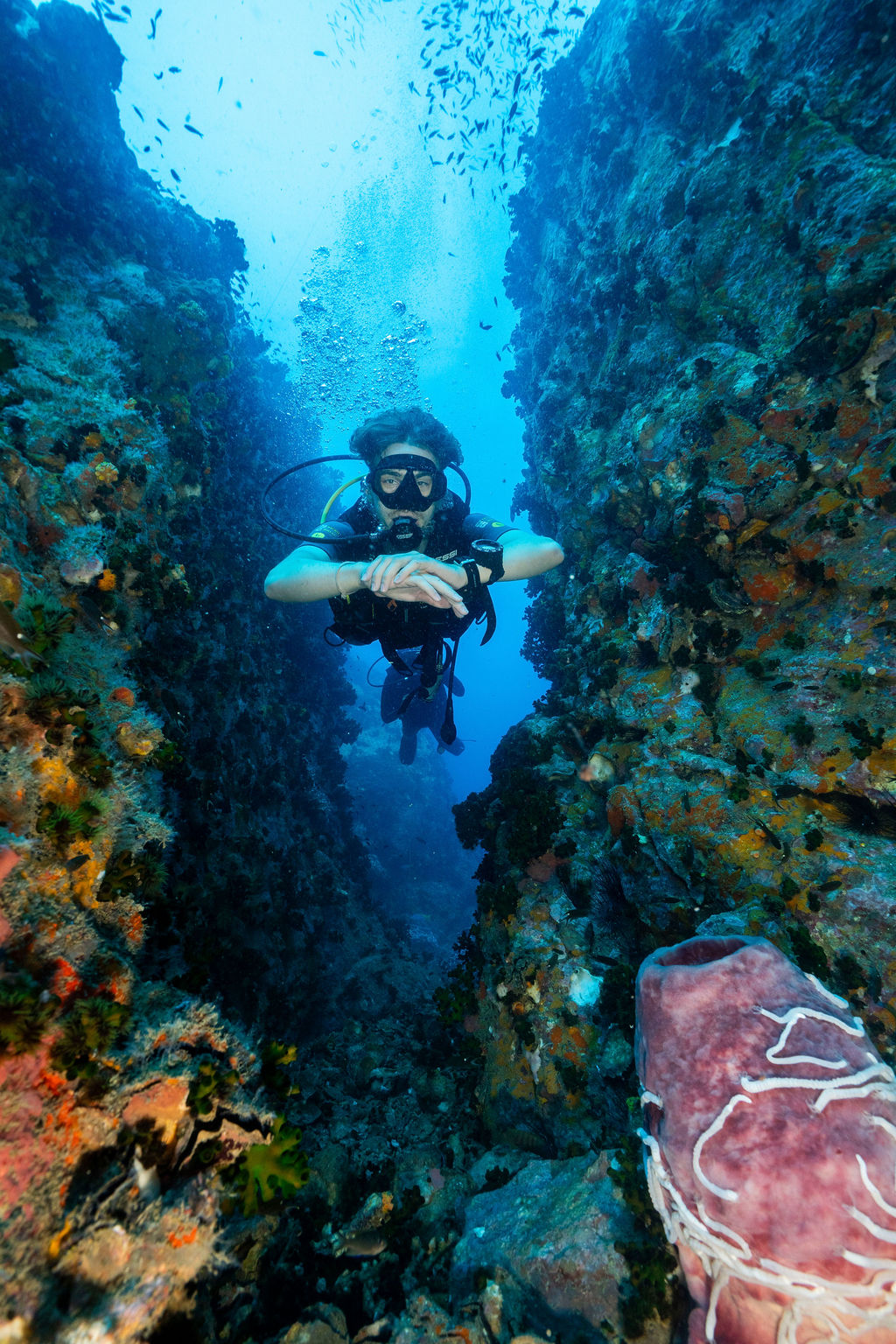
Pottery / Junkyard Artificial Reef
artificial reef, conservation training, macro life and buoyancy practice
Overview
- Best for: eco divers, conservation students, macro lovers, refreshers, buoyancy and fish ID
- Not ideal for: big fish, pristine natural reef, deep dives or dramatic topography
- Vibe: quirky, shallow, educational and slow-paced
- Must-do or easy local site: niche, not first-day must-do
Depth and Certification Level
- Depth: generally shallow, often 6-12 m
- Beginners: yes with supervision
- Open Water: yes, especially later dives
- Advanced Open Water: yes for buoyancy, naturalist, fish ID, photo and navigation
- Recommended certification: Open Water; good buoyancy needed for conservation areas
- Guide recommended: strongly recommended to understand what you are seeing
Marine Life and Underwater Scenery
- Landscape: artificial reef structures, coral frames, rubble/sand, small natural rocks and restoration modules
- Common marine life: juvenile fish, damselfish, wrasse, gobies, blennies, shrimp, crabs, nudibranchs and small reef fish
- Special sightings: pipefish, seahorses if lucky, scorpionfish, cuttlefish, morays and unusual juveniles
- Macro life: yes, one of the better reasons to go
- Bigger fish: no
- Coral and reef scenery: good for seeing coral growth/restoration rather than pristine reef
- Photography: yes for macro and conservation content
Conditions and Hazards
- Visibility: variable, often lower nearshore
- Current: usually mild
- Weather sensitivity: rain/runoff and west-side swell can reduce visibility
- Shelter/exposure: generally sheltered nearshore
- Wind and sea conditions: west/southwest conditions and runoff
- Hazards: sharp structures, fishing line, fragile coral frames, low visibility and boat traffic
- Swim-throughs/caves: structure gaps only if briefed; not overhead diving
- Wreck penetration: No, unless this is a wreck-specific page. For HTMS Sattakut only, penetration requires proper wreck training, equipment and supervision.
Typical Dive Profile
slow shallow tour between structures, coral growth and macro life
- Morning/afternoon/full-day: morning or afternoon local trip
- Boat time: short local ride, often 5-20 minutes depending site
- Night diving: can be interesting for macro but not classic
- Dive schools: yes, especially eco-focused schools
- Busy with boats: less than main training sites
Courses and Skills
- Try dives: possible but not first choice
- Refreshers: yes
- Deep dives: no
- Navigation: yes, structures make landmarks
- Buoyancy: excellent
- Specialties: conservation, buoyancy, photography, fish ID, naturalist, navigation
Local Advice
This is a conservation, buoyancy and macro-life site rather than a pristine natural reef. It is useful supporting content for eco-minded divers and refreshers.
Nearby Paired Sites
Pottery, Three Rocks, Jansom, Mae Haad Reef, White Rock
White Rock | Diving in Koh Tao
Local Tips
- What makes it different: human-made habitat and reef restoration angle
- Manage expectations: not pristine or dramatic
- Best thing: seeing marine life use human-made habitat
- Main downside: can look messy if unexplained
- Tip: go with someone who knows the structures and dive slowly