

Open Water Diving Courses in Koh Tao
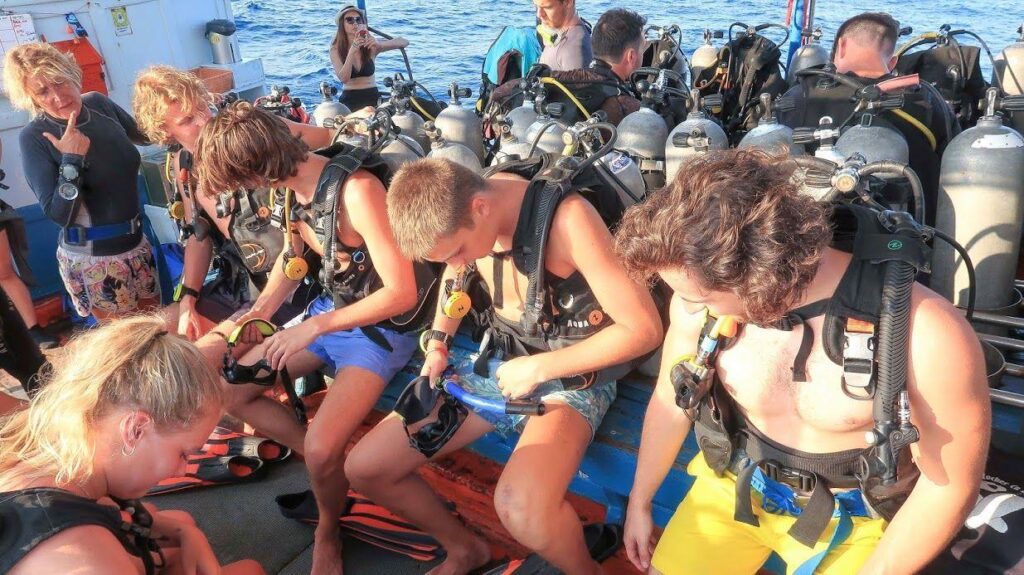
An Open Water course is the entry-level scuba certification for people who want to become qualified divers. Koh Tao is one of Thailand's busiest places to learn, with warm water, many dive schools and beginner-friendly dive sites close to the island.
The course is more involved than a one-off Try Scuba experience. You learn theory, practise skills and complete open-water training dives with an instructor. Course length and daily schedule vary by school, training agency and weather.
What Certification Allows
After certification, Open Water divers can usually join recreational fun dives with a buddy within agency depth limits and local rules. Exact limits can vary by age and agency, so check the standards for the course you choose.
Who It Is For
- Beginners who want a recognised scuba certification.
- Travellers who want to continue fun diving after Koh Tao.
- People who are comfortable in the water and ready for a few days of learning.
- Visitors who prefer structured training rather than a single introductory dive.
Common Course Components
- Theory: online or classroom learning covering equipment, pressure, dive planning, safety and the underwater environment.
- Confined-water or pool training: controlled practice of key skills before open-water dives.
- Open-water dives: supervised training dives at suitable sites where you apply the skills in real conditions.
PADI, SSI, RAID and Other Agencies
Koh Tao has schools teaching through several recognised agencies. For most new divers, the instructor, safety culture, group size, language and learning environment matter more than the logo on the card. Ask how the course is taught, how many students are in the group and what support is available if you need more time.
Medical and Swimming Considerations
You will need to complete a diving medical questionnaire. Some answers may mean you need medical clearance before starting. You should also be able to swim and float comfortably enough for the course requirements. If you are unsure, ask the dive centre before booking.
Questions To Ask Before Booking
- How many students are normally in each group?
- Which language will the course be taught in?
- Where are the confined-water sessions held?
- What is included: learning materials, certification, equipment, insurance, transfers and boat fees?
- What happens if you need extra time?
- Can accommodation be arranged, and where is it located?
- How does the school avoid rushing the course?
Where You Might Dive
Beginner course dives are usually planned around calm conditions and suitable training sites. Japanese Gardens Dive Site, Twins, White Rock, Mango Bay Dive Site and Ao Leuk Dive Site can all be relevant in the right conditions.
After Certification
Many new divers stay on Koh Tao for fun diving or continue with advanced training. If you are planning a longer course, also read Where to Stay in Koh Tao; location makes a real difference to early starts, evening study and how relaxed the course feels.
A Local Option
Chalok Reef Divers is a Chalok-based dive centre and a useful example for visitors looking for small-group training away from the busiest Sairee nightlife. Its Chalok location also pairs naturally with nearby accommodation options.
KohTao.Rocks has worked with Chalok Reef Divers, so this is not a completely independent recommendation. We include it because we know the operation and its Chalok location, but visitors should still compare several centres and choose the environment that suits them.
Plan Your First Course
Compare this with Try Scuba, read how to choose a dive school in Koh Tao, or return to the main Diving in Koh Tao hub.