
Things To Do on Koh Tao – Snorkel Tours, Viewpoints & More

Best Things to Do on Koh Tao (2025 Guide)

Beyond world-class diving, Koh Tao is loaded with easy adventures—snorkel coves, mellow paddles, short hikes to big views, and sunset hangs. Use this guide to plan a few perfect island days.

At a glance

  • On the water: snorkel tours, kayak/SUP, hire a longtail to quiet bays.
  • On land: viewpoints & short hikes, Muay Thai, yoga, café hopping, cooking classes, sunset spots.
  • Day trip: Koh Nang Yuan for the sandbar + viewpoint.
  • Family-friendly: calm-day beach time (Ao Leuk, north Sairee), easy bays, paddle boards.
Conditions change with wind/season. If the west is breezy, the east is often calmer (and vice-versa).

Water activities

Snorkel tours (half-day / full-day)

Boat trips circle the island with stops like Ao Leuk, Tanote, Hin Wong, Mango Bay, and sometimes Nang Yuan.

  • Tips: reef-safe sunscreen, rash guard, fins if you have them; don’t stand on coral; follow boat lanes and flag systems.
  • Booking: easy to arrange at Mae Haad kiosks, Sairee beach stands, or any dive/snorkel shop. For peak weeks, book a day in advance.

Kayak & SUP (rentals at many beaches)

Great on calm days for exploring headlands and small coves.

  • Best zones: Sairee (north), Chalok, Ao Leuk, Sai Daeng → Shark Island (only if flat).
  • Safety: stay near shore, wear a leash, watch boat traffic; mornings are usually smoother.

Longtail hire (DIY mini-tour)

Hire a local longtail with skipper to hop between 2–4 bays.

  • Good combos: Sairee → Mango Bay → Hin Wong; or Ao Leuk → Sai Daeng → Tanote on flat days.
  • Bring: water, hat, dry bag, cash for entry/parking at some bays.

Land activities

Viewpoints & short hikes

  • John-Suwan Viewpoint: classic split-bay view over Chalok & Shark Bay (short, steep, small entry fee).
  • Love Koh Tao: drive-up café viewpoint over the east side (buy a drink or pay a view fee).
  • Mango Viewpoint: west-ridge sunset panorama (steep road, small fee).
  • Two View / ridge tracks: bouldery lookouts—use grippy shoes and offline maps.

Muay Thai (train or watch)

Gyms offer drop-in classes; you can also catch Fight Nights when scheduled.

  • Bring: water, towel, light clothes; for stadium nights, arrive early for seats.

Yoga & fitness

Morning vinyasa, sunset yin, and occasional sound-bath/ice-bath add-ons. See Yoga & Wellbeing on Koh Tao for live timetables.

Thai cooking classes

Fun, hands-on half-day sessions covering pastes, stir-fries, and classics like green curry or pad thai.

  • Good to know: most can do vegetarian/vegan and mild/spicy variants; choose an evening slot if you’re diving in the day.

Rock boulders & scrambling

Granite outcrops and short scrambles around ridges and bays.

  • Safety: avoid after rain; shoes with grip; respect private land and gates.

Cafés, markets & chill

Island-roasted coffee, smoothie bowls, Thai seafood grills; pop-up evening markets around Sairee/Mae Haad.


Day trip: Koh Nang Yuan

  • Why go: unique triple-island sandbar + viewpoint.
  • How: join a snorkel boat or hire a longtail; island entry fee; steps to the lookout.
  • Best time: early or late to dodge the midday crowds; bring water shoes for hot boards and rocky bits.
  • Rules: check onsite for current restrictions (e.g., bottle/drone policies) and opening hours.

Sunset spots

  • Sairee Beach (walk north for a quieter vibe), Mae Haad south corner, Mango Viewpoint for ridge sunsets.
  • Tip: arrive 30–45 minutes before sunset for the best color.

Eco & safety notes

  • Reef care: use reef-safe sunscreen; never stand on coral or seagrass.
  • Hydration: it’s hot—carry water and shade up.
  • Roads: hills and sand patches—ride cautiously; helmets always.
  • Waste: bins are limited at some beaches—pack it out.

Planning & timing

Diving & Snorkeling on Koh Tao — Best Sites, Day Trips & How to Start


  • Learn to dive: Koh Tao is one of the world’s most popular places to take your Open Water course (3–4 days).

  • Certified fun dives: Pinnacles, boulder gardens, and a local wreck; easy logistics with 2-tank trips morning/afternoon.

  • Day trip highlight: Sail Rock (between Tao & Samui/Phangan) when conditions allow.

  • Snorkeling from shore: Ao Leuk, Tanote, Sai Daeng, Hin Wong, Shark Bay, Mango Bay (conditions vary with wind).

  • Marine life: batfish, barracuda, trevally, fusiliers, groupers, turtles; whale shark sightings are occasional and never guaranteed.

Sea conditions change with the season and weather systems. Always follow your dive leader’s briefing and local advice.


Map (add later)

When you’re ready, we’ll add a My Maps embed with pins for the sites below and snorkel bays and drop it here.


Learn to Dive (Beginner)

Open Water Diver (OWD)

  • Duration: typically 3–4 days (theory + shallow skills + 4 training dives).

  • What you’ll do: basic skills, buoyancy, buddy procedures, safety.

  • Swimming: you’ll need to demonstrate basic swim/float ability.

  • Tips: pick a school that groups by language/level, keeps class sizes small, and includes a check-out dive if you haven’t been underwater before.

Try Scuba / Discover Scuba Diving

  • Duration: half-day to 1 day.

  • Depth: usually limited (e.g., 12 m max, depends on agency).

  • Good for: deciding if a full course is for you.

After OWD

  • Advanced Adventurer/Advanced Open Water: introduces deep and navigation (and often buoyancy/ night/wreck); unlocks more sites.

  • Nitrox (EANx): longer no-deco time on moderate depths; great for the pinnacles.


Certified Fun Diving (What to expect)

  • Schedules: morning and afternoon boats; some shops run sunrise/sunset/night dives.

  • Groups: usually small, guided by Divemasters/Instrs; experience-based grouping.

  • Requirements: recent dive within the last year is often requested; bring your logbook/e-log and certification card/app.

  • Gear: rental is ubiquitous; bring your own computer if you have one (or rent).

  • Environment: boat entries (giant stride) and ladders for exit; surface marker buoys carried by guides.


Top Dive Sites (local & day trips)

Depths and difficulty are typical; operators may set different prerequisites based on conditions and your recent experience.

Chumphon Pinnacle {#chumphon}

  • Type: offshore granite pinnacle(s)

  • Depth: ~14–35 m (top ~14 m)

  • For: Advanced Open Water recommended (or OWD with experience/guide discretion)

  • Why go: schools of barracuda, batfish, trevally; occasional whale shark; dramatic topography.

Southwest Pinnacle {#southwest}

  • Type: cluster of pinnacles with sandy patches

  • Depth: ~12–30 m (top ~12 m)

  • For: OWD with good buoyancy or AOW

  • Why go: pink anemone gardens, big schools, frequent pelagic traffic.

White Rock {#white-rock}

  • Type: two large bommies, sand channels, night-dive favorite

  • Depth: ~5–22 m

  • For: All levels (great for training + fun dives)

  • Why go: relaxed navigation, frequent blue-spotted rays, night critters.

Twins (near Nang Yuan) {#twins}

  • Type: twin bommies on sand, sheltered

  • Depth: ~5–18 m

  • For: All levels, ideal for training and refreshers

  • Why go: easy conditions, photogenic anemonefish, macro if you slow down.

Green Rock {#green-rock}

  • Type: swim-throughs, caverns, surge channels

  • Depth: ~6–28 m

  • For: Confident OWD/AOW; check surge conditions

  • Why go: fun topography; look for morays and schools in the channels.

Hin Wong Pinnacle {#hin-wong-pinnacle}

  • Type: offshore pinnacle off the NE

  • Depth: ~10–30 m

  • For: OWD with experience/AOW; can be choppy

  • Why go: big schools, healthy soft corals in places; macro around the rocks.

Shark Island {#shark-island}

  • Type: rocky islet SE of Tao

  • Depth: ~5–25 m

  • For: OWD+; currents vary

  • Why go: mixed coral, chance of turtles, sweeping views around the islet.

HTMS Sattakut Wreck {#sattakut}

  • Type: WWII-era landing craft (artificial reef)

  • Depth: ~18–30 m (deck ~18–22 m depending on tide)

  • For: AOW or Wreck/Deep Adventure recommended

  • Why go: guns, structure, schooling fish; combine with White Rock.

Sail Rock (Day Trip) {#sail-rock}

  • Type: famous pinnacle between Tao & Samui/Phangan

  • Depth: ~5–35 m (chimney swim-through ~6–18 m)

  • For: Usually OWD+; AOW preferred on deeper profiles

  • Why go: big vertical walls, chimney, frequent schooling action; classic Gulf site.


Snorkeling Highlights (from shore)

  • Ao Leuk: easy entry, coral on both sides; great first-timer bay.

  • Tanote: boulders + fish life straight off the sand; check surf before jumping from the rock.

  • Sai Daeng → Shark Island: kayak or hug the headlands (only in calm seas).

  • Hin Wong: clear and deep close to shore—best for confident swimmers.

  • Shark Bay (Thian Og): look for turtles over seagrass; respect distance from wildlife.

  • Mango Bay: lovely water; land access can be via resort/fees—boats are common.

Snorkel safety: fins help in light current, use a visible snorkel buoy/float if you’re not close to shore, never stand on coral, and avoid boat lanes.


Seasons & Conditions

  • Calmer/clearer spells: generally Jan–May and often Jul–Sep.

  • Wavier/wetter patch: typically late Oct–Nov (varies).

  • Whale sharks: occasional in Mar–May and Sep–Oct; sightings are never guaranteed.

  • Best boat rides: morning often smoother if it’s windy.


Safety, Eco & Etiquette

  • Listen to briefings; stay with your group and watch your no-deco time.

  • Buoyancy first: avoid contact with reef; keep fins up over coral.

  • Reef-safe sunscreen or wear a rash guard.

  • SMB & surface: guides carry an SMB; stay clear of boat props; use ladders.

  • Wildlife: no touching/feeding/chasing; give turtles, rays and sharks space.

  • Trash: pack it back; boats have bins.

Tao Beaches & Viewpoints — Best Bays, Snorkel Spots & Sunset Views

At a glance

  • Best snorkeling from shore: Ao Leuk, Sai Daeng, Tanote, Hin Wong, Shark Bay (Thian Og).

  • Easiest with kids / calm water days: Sairee (north half), Chalok Baan Kao (on calm days), Ao Leuk.

  • Sunset: Sairee Beach, Mae Haad south, Nang Yuan viewpoint (day trip).

  • Top viewpoints: John-Suwan, Love Koh Tao, Mango Viewpoint, Nang Yuan.

Quick tips: Sea conditions change with wind. If the east is breezy, try the west; if the west is choppy, head east. Bring cash for occasional access/parking where beaches are reached through private land.


Map: Beaches & Viewpoints

Add a simple Google My Maps with pins for each beach and viewpoint, then embed it here.

How to embed (Joomla): Content → Site Modules → New → Custom → switch editor to Code → paste your iframe → assign module to this menu item.

 
<!-- Replace src with your My Maps share URL --> <iframe src="https://www.google.com/maps/d/embed?mid=YOUR_MAP_ID" width="100%" height="460" style="border:0" loading="lazy" referrerpolicy="no-referrer-when-downgrade"></iframe>

Beaches (west → south → east → north)

Sairee Beach (west coast)

Long, sandy, social. Great for sunset, cafés and easy swims on calm days. North Sairee often clearer water than the pier end.

  • Best for: sunset, easy beach day, families.

  • Notes: can be wavy/windy in some seasons; snorkel is average compared to the bays.

Mae Haad (pier area) {#mae-haad}

Useful for arrival, with a few small sandy patches south of the pier for swims and sunset photos.

  • Best for: short sunset walk, convenience.

  • Notes: boats = less snorkeling; stroll south for quieter water.

Chalok Baan Kao (south) {#chalok}

Wide shallow bay with a relaxed vibe.

  • Best for: chill cafés, paddle board on calm days.

  • Notes: shallow at low tide; water clarity varies.

Freedom Beach & Taatoh (south) {#freedom}

Small coves near the southern tip, often accessed via little paths through resorts.

  • Best for: clear water on calm days, classic palm-leaning-over-sand photos.

  • Access: steps/paths; some areas may request a small access/parking fee in cash.

John-Suwan Bay side (nearby coves) {#john-suwan-bays}

Tiny rocky coves under the John-Suwan ridge.

  • Best for: quiet pockets, snorkeling on calm days.

  • Notes: combine with the viewpoint hike.

Shark Bay / Thian Og (south) {#shark-bay}

Pretty turquoise bay; known for turtle sightings and occasional blacktip reef sharks (harmless if left alone).

  • Best for: snorkeling from beach or kayak.

  • Access: several resorts line the bay; land access may involve a small fee. Enter gently to protect seagrass and coral.

Sai Daeng Beach (southeast) {#sai-daeng}

Lovely sandy cove facing Shark Island; strong snorkeling with healthy coral.

  • Best for: snorkeling/kayak to Shark Island (only in calm conditions).

  • Notes: steeper road/steps; bring reef-safe sunscreen.

Ao Leuk (southeast) {#ao-leuk}

A favorite: clear, protected bay with coral on both sides; easy entry.

  • Best for: shore snorkeling, families, lounging.

  • Access: may request small access/parking fee via the beachfront properties.

Tanote Bay (east) {#tanote}

Granite-boulder bay with snorkeling straight off the beach; iconic jump rock (check depth/conditions first).

  • Best for: snorkeling, adventurous swims.

  • Notes: road is hilly; sea can be lively in easterly winds.

Hin Wong Bay (northeast) {#hin-wong}

Rocky bay with deep water close to shore and excellent fish life when calm.

  • Best for: experienced snorkelers and photographers.

  • Notes: entry over rocks—wear reef shoes; can be choppy in northeasterlies.

Mango Bay (north) {#mango-bay}

Clear water and coral; often accessed by boat or by a steeper road/hike.

  • Best for: snorkeling from boat, quieter north-end feel.

  • Notes: land access may be via resort gates/fees; boat trips are the easy option.

Lighthouse Bay (far northeast) {#lighthouse}

Remote rocky bay with very clear water on calm days.

  • Best for: boat trips and advanced snorkelers.

  • Notes: limited facilities; check wind before going.


Viewpoints

John-Suwan Viewpoint {#john-suwan}

The classic split-bay panorama over Chalok and Thian Og (Shark Bay). Short, steep trail with ropes.

  • Time/effort: 15–25 minutes up; moderate.

  • Access: trailheads near the southern beaches; small entry fee.

  • Tip: grippy shoes; go early or late for shade and softer light.

Love Koh Tao {#love}

Café viewpoint over the island’s interior and east side.

  • Time/effort: drive up; minimal walking.

  • Access: small viewpoint fee or buy a drink.

  • Tip: great mid-morning light and cloud-layer sunsets.

Mango Viewpoint {#mango}

High western ridge looking over Sairee and west coast.

  • Time/effort: drive + short walk; some steep sections.

  • Access: viewpoint hut may collect a small fee.

  • Tip: one of the best sunset vantage points when skies are clear.

Two View / West Coast ridgeline {#two-view}

Forest tracks to several bouldery lookouts on the spine of the island.

  • Time/effort: hike or ride + hike; moderate.

  • Tip: download an offline map; avoid after heavy rain.

Nang Yuan Viewpoint (day trip) {#nang-yuan}

Famous sandbar triple-island view.

  • Access: boat from Koh Tao; island entry fee; steps to the top.

  • Tip: go early/late to avoid crowds; shoes with grip for the final rock.


Practical & eco tips

  • Reef-safe sunscreen only; don’t stand on coral or seagrass.

  • Water & shade: many bays have limited shade—bring water and a hat.

  • Footwear: reef shoes help at rocky entries; viewpoints need grippy soles.

  • Cash: bring small bills for access/parking where beaches are reached through private land.

  • Waste: pack out what you bring; bins aren’t everywhere.


Q: What’s the best snorkeling beach?
A: Ao Leuk is the easiest all-rounder; Tanote, Hin Wong, and Sai Daeng are excellent on calm days.

Q: Where’s best for sunset?
A: Sairee Beach and Mango Viewpoint; Nang Yuan if you’re on a day trip.

Q: Do I need to pay to access beaches?
A: Public coastline is free, but some land access/parking routes pass through private property that may charge a small fee—bring cash.

Q: Is Shark Bay safe?
A: Yes—blacktip reef sharks are shy. Keep distance, don’t chase wildlife, and avoid standing on coral.


Best Time to Visit (Weather)

Best Time to Visit Koh Tao — Weather, Sea Conditions & Crowd Levels (2025)

Koh Tao is a year-round island. Conditions shift through the seasons, but you’ll find beach days and diveable water in every month—just plan around the weather pattern you’re likely to meet.

Continue reading "Best Time to Visit (Weather)"

Travel Insurance

Travel insurance: simple & flexible

You can buy and claim online, even after you've left home. Travel insurance from WorldNomads.com is available to people from over 130 countries. It’s designed for adventurous travellers with cover for overseas medical, evacuation, baggage and a range of adventure sports and activities.


7 things you should know about travel insurance from WorldNomads.com

  1. Trusted reliable underwriters
    WorldNomads.com is backed by a suite of strong, secure, specialist travel insurers who provide you with great cover, 24 hour emergency assistance and the highest levels of support and claims management when you need it most.
  2. Value for money with the cover you need
    WorldNomads.com provides cover for what's important for travellers from over 130 countries. By focusing on what you need and leaving out what you don't, World Nomads prices are some of the most competitive online.
  3. Flexibility when you need it most
    Had a change of plans? You can buy more cover or claim online while you are still away. You can even buy a World Nomads policy if you're already travelling.
  4. Cover for a range of adventure activities
    From skiing & snowboarding in New Zealand to whitewater rafting in Colorado, WorldNomads.com covers a range of adventure activities, giving you peace of mind to get the most from your travels.
  5. World Nomads keeps you travelling safely
    All WorldNomads.com members have access to up-to-date travel safety alerts, as well as travel safety advice and tips online through the World Nomads Travel Safety Hub.
  6. More than just great value travel insurance
    All WorldNomads.com members can learn the local lingo through a series of iPod & iPhone Language Guides and can stay in touch with family and friends with an online travel journal.
  7. Commitment to exceptional customer service
    We want to make sure you get the most from WorldNomads.com. You can find out more about why travel insurance is important for your trip. If you have any questions about your travel insurance or travel safety in general, please contact WorldNomads.com directly.

Travel insurance: simple & flexible

You can buy and claim online, even after you've left home. Travel insurance from WorldNomads.com is available to people from over 130 countries. It’s designed for adventurous travellers with cover for overseas medical, evacuation, baggage and a range of adventure sports and activities.

7 things you should know about travel insurance from WorldNomads.com

  1. Trusted reliable underwriters
    WorldNomads.com is backed by a suite of strong, secure, specialist travel insurers who provide you with great cover, 24 hour emergency assistance and the highest levels of support and claims management when you need it most.
  2. Value for money with the cover you need
    WorldNomads.com provides cover for what's important for travellers from over 130 countries. By focusing on what you need and leaving out what you don't, World Nomads prices are some of the most competitive online.
  3. Flexibility when you need it most
    Had a change of plans? You can buy more cover or claim online while you are still away. You can even buy a World Nomads policy if you're already travelling.
  4. Cover for a range of adventure activities
    From skiing & snowboarding in New Zealand to whitewater rafting in Colorado, WorldNomads.com covers a range of adventure activities, giving you peace of mind to get the most from your travels.
  5. World Nomads keeps you travelling safely
    All WorldNomads.com members have access to up-to-date travel safety alerts, as well as travel safety advice and tips online through the World Nomads Travel Safety Hub.
  6. More than just great value travel insurance
    All WorldNomads.com members can learn the local lingo through a series of iPod & iPhone Language Guides and can stay in touch with family and friends with an online travel journal.
  7. Commitment to exceptional customer service
    We want to make sure you get the most from WorldNomads.com. You can find out more about why travel insurance is important for your trip. If you have any questions about your travel insurance or travel safety in general, please contact WorldNomads.com directly.


Why buy travel insurance from World Nomads.com?

  1. Backed by specialist insurers and global assistance partners
  2. Buy Online, even if you’ve already left home
  3. Buy more cover and claim online while travelling
  4. Covers a range of adventure sports and activities
  5. Give a little back and support a community development project

Divemaster Training on Koh Tao

Divemaster Training on Koh Tao (2025 Guide)

Becoming a Divemaster is the first step into the professional world of scuba diving. On Koh Tao, one of the busiest training hubs in the world, you’ll find courses with the three major certifying agencies: PADI, SSI, and RAID. Each follows international standards and prepares you to supervise dives, assist instructors, and grow into a dive professional — but they differ slightly in philosophy, flexibility, and fees.

Continue reading "Divemaster Training on Koh Tao"

Koh Tao Taxis

Taxis on Koh Tao (2025): what to expect, why they cost more, and how to ride smart

Koh Tao taxi On a small, hilly island with short distances and no meters, taxis on Koh Tao will feel pricey compared with the mainland. The good news: prices have become more reasonable post-pandemic, and there are now a handful of motorcycle taxis for short hops. Here’s how it works and how to keep costs down.

Why taxis are expensive here (the balanced view)

  • No meters + very short trips: Most rides are only a few kilometers; a metered fare would be too low to cover costs on such short runs.
  • Financed vehicles: Many independent (non-resort) drivers buy their pickup or taxi on finance. Fares need to cover repayments, maintenance, fuel, and a living wage for a small local business—often supporting a family.
  • Terrain & wear: Steep hills, rough concrete, and salt air mean higher maintenance and lower vehicle lifespans than in cities.
  • Seasonality: Bad-weather days and quieter months reduce earning days, so rates in peak hours/season help balance the year.

Types of taxis you’ll see

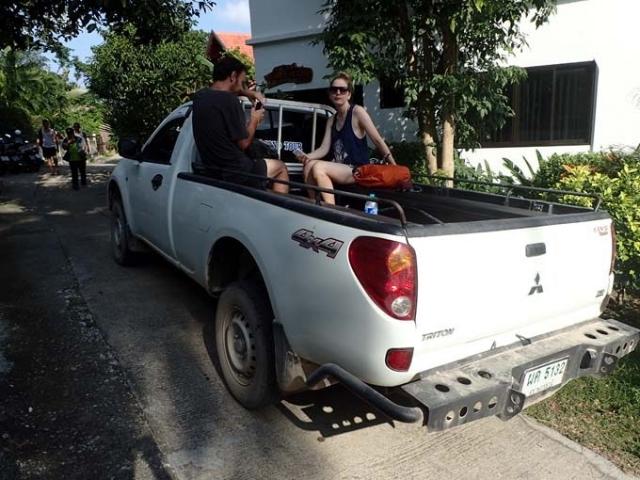
  • Pickup taxis (most common): Bench seats in the back, space for luggage, and fixed island rates (per ride or per person depending on the route/operator). Good for 2–6 people.
  • Motorcycle taxis (limited but growing): Best for solo travelers and short hops within a village area. Always wear a helmet and keep big bags for pickup taxis instead.

Where to find a taxi

  • Mae Haad Pier: The main taxi cluster when you arrive/depart.
  • Outside 7-Elevens: Common waiting spots across the island—especially in Mae Haad, Sairee, and Chalok.
  • Busy junctions & beach fronts: Around central Sairee and other popular strips in the evening.
  • Your resort/dive center: Many offer free/paid pick-ups—ask ahead and save the arrival fare.

Typical pricing (guide only)

Boarded prices and quotes vary by distance, time of day, weather, and whether you’re paying per person or for the whole vehicle. As a rough example, recent quotes for Pier (Mae Haad) → Sairee have often been given as a single-vehicle price around ฿300; sharing that between 4–6 people brings the per-person cost down substantially. Always confirm the total and whether it’s per vehicle or per person before you hop in.

Money, safety & etiquette

  • Cash is king: Most drivers prefer cash; carry small notes.
  • Agree first: Confirm destination, total price, and per-vehicle vs per-person before the ride. Night/rain surcharges are normal.
  • Seatbelts/helmets: Use seatbelts where available; on motorcycle taxis, always wear a helmet.
  • Bags: Keep valuables with you; secure loose items in the pickup bed.
  • Polite Thai helps: “ไป…เท่าไหร่ครับ/คะ?” (bai … tao-rai khráp/khá?) = “How much to …?”

Ways to spend less

  • Pre-book a pick-up with your accommodation or dive shop—many include it or offer a better rate than ad-hoc taxis at the pier.
  • Share rides (especially pier → Sairee/Chalok). Ask fellow arrivals if they’re heading the same way.
  • Travel light to make sharing easier and keep quotes down.
  • Walk for micro-trips: In village centers, many places are 5–15 minutes on foot.

About motorcycle taxis

  • When they’re useful: Short point-to-point hops within Sairee, Mae Haad, or Chalok.
  • How to spot one: Often waiting near 7-Elevens or busy corners; ask politely if they’re taking fares.
  • Safety first: Helmet on, one passenger only, no large bags, and confirm price before riding.

Final tip for arrivals

If you haven’t booked your ferry yet, you can arrange it online and then ask your accommodation whether they offer a pier pick-up window. A little planning can save you the most expensive taxi of your trip—the one right after you step off the boat.

Thai Cooking class Koh Tao

{field 1} {field 2} {field 3} {field 4} {field 5} Best time: {field 6}

{field Booking URL} {field Map location}

Would you like to learn how to cook Thai food in a Thai person's home on Koh Tao?

Parawan's Thai Home Cooking Classes

Take a cooking class with Parawan, who has lived on Koh Tao for over 10 years. She invites you to come and take a Thai cooking lesson at her home. The maximum number of students that she can take for a cooking class is 4.

Whoever books in first for a particular day gets to choose which dishes the class will be cooking, so it's worth booking early. You can also check if there are already people booked in and what will be on the menu before you book. Parawan is flexible with the start time for the courses—contact her for more details.

Parawan has a young family and runs classes after her children have gone to school at her home in Sairee, so she can start the cooking class between 9:30am and 2pm.

Taking a cooking class on Koh Tao to learn how to cook authentic Thai food is a great skill to take home from your trip to Thailand. You can then reproduce some of your favourite dishes at home whenever you like and impress your friends and family with your new cooking skills.

Deep-fried Vegetable Spring Rolls

Learn Thai Home Cooking

Amazing Thai Food Spread


You will learn to make 3 dishes during the cooking course. If you have any favourite dishes then let Parawan know and she can teach you those. If you aren't sure, she can suggest dishes to cook with a bit of information from you (e.g., spicy or not spicy, vegetarian, dislike fish, etc.). Whoever books in first for a particular day will get to select the dishes that the class will make—so it's worth booking in advance if you have particular favourites.

Below are just some of the options you can pick from when you take your Thai cooking class Koh Tao. Click to view the Full Cooking Course Menu.

Larb Logo Pad Ka Pow Logo <img src="images/Activities/Cooking/Parawans_Thai_Home_Cooking_Classes/thumbnails/thumb_Cook_Green_Curry.jpg" alt="Cook Green_

Stand Up Paddle Boards Koh Tao (2025) | Rentals, Routes & Sunset SUP

SUP Tao

Stand Up Paddle Boards (SUP) on Koh Tao (2025)

Glassy mornings, golden sunsets, and sheltered bays make Koh Tao a sweet spot for stand up paddle boarding. This guide shows you where to rent, best times & routes, prices, and reef-friendly tips so you can get on the water today.

Where to rent a paddle board

SUP TAO — Sairee (West) & Hin Wong (North-East)

Koh Tao’s longest-running SUP outfit with multiple pickup points and lots of board sizes.

  • Sairee HQ: at Maya Beach Club (great for sunset paddles). Posts often list ~11:00–18:30 with boards out till sunset. Island Travel Koh TaoFacebook

  • Hin Wong Beach Bar: daytime rentals (~09:00–18:00). Handy when the other side of the island is breezy—gives you options year-round. Instagram+1

  • Updates / DMs: Instagram @suptao and Facebook SUP TAO announce which spot is operating that day. InstagramFacebook

Also look for beach-shack rentals around Sairee, Mae Haad and Chalok—handy for a quick hour on the water. Availability varies by day/season. Koh Tao Complete Guide

How much does SUP cost?

Expect from ~250 THB / hour, with common options ~600 THB half-day and ~900 THB full-day. Always check the same-day post or message the operator for current prices and operating side. The Funky Turtle+1Island Travel Koh Tao

Best time to paddle

  • Sunrise (calmest water, few boats) or late afternoon → sunset (iconic west-coast glow). Island Travel Koh Tao

  • If the west is choppy, ask about Hin Wong on the north-east side; SUP TAO rotates locations to suit conditions. Instagram

Easy routes to try

  • Sairee shoreline cruise: hug the beach for an easy out-and-back; great at sunset. Island Travel Koh Tao

  • Hin Wong bay loop: glassy mornings with clear water over coral gardens; stay well outside the snorkelers and reef. Island Travel Koh Tao

Safety & reef-friendly tips

  • Leash on, phone in a dry bag, and keep an eye on wind/current.

  • Give wildlife space (turtles, baby blacktip reef sharks) and never stand on coral. Island Travel Koh Tao

  • Sunscreen: Thailand’s national parks ban reef-harmful sunscreen ingredients (oxybenzone, octinoxate, 4-MBC, butylparaben). Koh Tao bays aren’t a marine park, but using reef-safe mineral sunscreen everywhere is best practice. TAT Newsroom

What to bring

Rash guard or long-sleeve swim top, water (refillable), small towel, hat/sunglasses with strap, and cash/QR for rentals.


FAQs

Do I need to book?
Usually walk-up is fine. For groups or full-day boards, message SUP TAO on the morning for availability. Facebook

Can beginners try?
Yes. Rental staff give a quick safety/technique brief and will size a board for stability. Sunrise or late afternoon is the easiest time for first-timers. Island Travel Koh Tao

Where’s best for calm water today?
Check SUP TAO stories—if the west is windy, they’ll often run from Hin Wong instead. Instagram


Useful links (check today’s hours)


What’s Koh Tao like, is it just for divers?

What’s Koh Tao like — is it just for divers? (2025)

Koh Tao built its reputation on world-class beginner diving, but the island has grown into a well-rounded beach escape with hiking trails, viewpoints, yoga, Muay Thai, boat trips, and a lively food & nightlife scene. Access is easier than it used to be too: in addition to ferries via Samui and Phangan, there are fast services to and from Chumphon, so many travelers now stop on Koh Tao either on the way down from Bangkok or on the way back up.

Continue reading "What’s Koh Tao like, is it just for divers?"